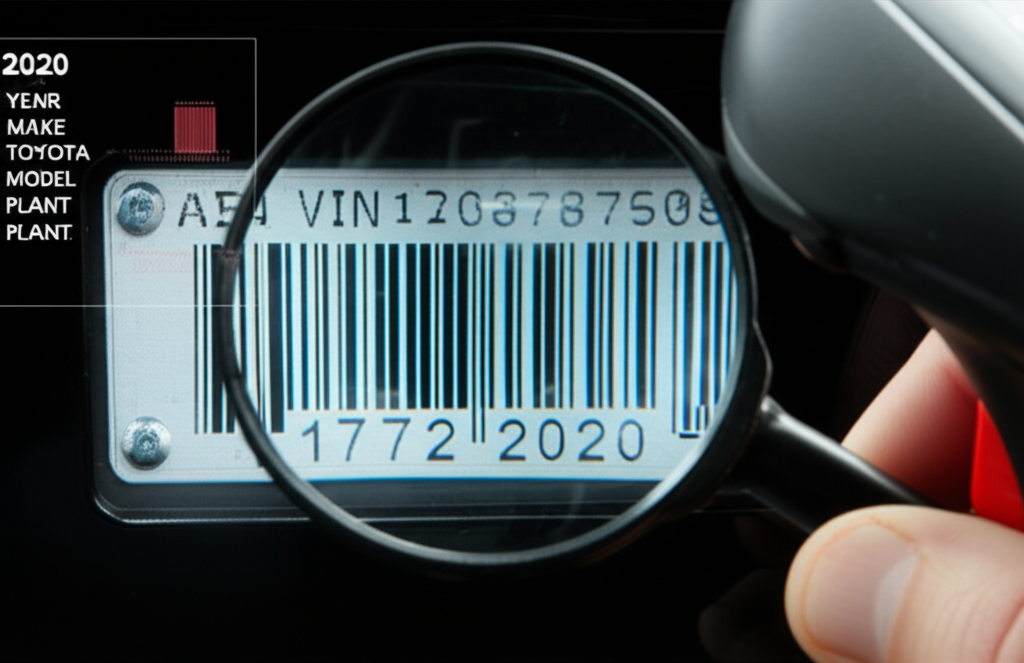
VIN Decoding: What It Is, Data Sources & Common Errors
Complete guide to VIN decoding for dealerships: how it works, reliable data sources (NHTSA, NMVTIS), common decoding errors, and best practices.
VIN decoding is the foundation of accurate vehicle listings. A correctly decoded VIN auto-populates make, model, trim, engine, transmission, and factory options—saving hours of manual data entry and preventing costly listing errors that kill buyer trust. Dealers who rely on manual entry average 15-20% listing errors; dealers using reliable VIN decoding reduce errors below 3%.
This guide covers how VIN decoding works, trustworthy data sources (NHTSA vs NMVTIS vs paid services), common decoding errors and their causes, and best practices for verification. Master VIN decoding to streamline inventory data entry, improve marketplace listing accuracy, and avoid embarrassing option mismatches.
How VIN Decoding Works
The 17-character VIN is a standardized code assigned by manufacturers at production. Each character or group of characters encodes specific vehicle information.
1. VIN Structure Breakdown
| Position | Information Encoded | Example |
|---|---|---|
| 1-3 (WMI) | World Manufacturer Identifier: Country and manufacturer | 1G1 = GM USA, JHM = Honda Japan |
| 4-8 (VDS) | Vehicle Descriptor: Model, body style, engine, restraint system | Varies by manufacturer |
| 9 | Check Digit: Validates VIN authenticity (math formula) | 0-9 or X |
| 10 | Model Year: A=1980/2010, B=1981/2011... (no I/O/Q) | M = 2021, N = 2022 |
| 11 | Assembly Plant: Factory where vehicle built | Unique to manufacturer |
| 12-17 | Sequential Production Number: Vehicle's production sequence | 000001-999999 |
2. What VIN Decoding Can Tell You
- Guaranteed Accurate: Make, model year, body style, engine type/size, transmission type, assembly plant, country of origin, manufacturer recall status.
- Usually Accurate: Trim level (base vs premium), drivetrain (FWD/RWD/AWD), basic safety features (airbags, ABS), fuel type (gas/diesel/hybrid).
- Often Missing: Optional packages (leather, sunroof, navigation), paint color, interior color, dealer-installed accessories, aftermarket modifications.
Reliable VIN Data Sources
Not all VIN decoders are created equal. Choose data sources based on your need: basic specs, title history, or complete option verification.
1. NHTSA VIN Decoder (Free, Recommended for Basic Specs)
Source: National Highway Traffic Safety Administration (NHTSA) public API
URL: vpic.nhtsa.dot.gov/api/
Cost: Free
- Provides: Make, model, trim, engine, transmission, body type, restraint systems, GVWR, plant location, recall information.
- Limitations: No title history, limited option data, no pricing information.
- Best for: Quick spec verification, DMS auto-population, marketplace syndication data.
2. NMVTIS (Paid, Title History Verification)
Source: National Motor Vehicle Title Information System
Access: Through approved providers (Carfax, AutoCheck, VinAudit)
Cost: $5-15 per VIN report
- Provides: Title brands (salvage, rebuilt, flood, lemon), odometer readings from title transfers, total loss records, junk/scrap history.
- Critical for: Pre-purchase verification (avoid title-washed vehicles), disclosure compliance (must reveal salvage/rebuilt status).
- Required by law: Dealers must disclose salvage brands—NMVTIS check prevents costly legal issues.
3. Paid VIN Decoding Services
| Service | Strengths | Cost |
|---|---|---|
| Carfax | Comprehensive history, accident records, service history, 1-owner flag | $40-50/report or subscription |
| AutoCheck | Similar to Carfax, auction history, score system (0-100) | $25-35/report or subscription |
| DataOne (for dealers) | Wholesale pricing data, auction results, market analytics | Subscription only ($200-400/mo) |
| Chrome Data | Detailed OEM specs, option packages, MSRP, equipment codes | Enterprise pricing |
Common VIN Decoding Errors
Even reliable decoders have limitations. Recognize common error patterns to avoid listing mistakes and buyer disputes.
1. Optional Equipment Not in VIN
Problem: VIN encodes base trim and factory packages, but many options are dealer-adds or port-installed accessories not captured in VIN structure.
- Example: Honda Accord EX-L VIN decodes correctly, but leather seats may be standalone option not reflected in VIN. Must verify physically.
- Common missing options: Sunroof, navigation (dealer-installed), upgraded wheels, tow package (sometimes), premium audio (varies by manufacturer).
- Solution: Use VIN data for base specs, manually verify options through physical inspection and owner's manual.
2. Trim Level Ambiguity
Problem: Some manufacturers encode trim level in VIN digits 4-8, others don't. Decoder may guess wrong trim based on options.
- Example: Toyota Camry VIN shows "LE" but vehicle actually has "SE" sport trim with visual differences. VIN decoder confused by option package overlap.
- Solution: Cross-reference VIN-decoded trim with vehicle badging (rear emblem), window sticker (if available), or owner's manual.
3. Year Model vs Production Year
Problem: VIN position 10 encodes model year, but production may start 6 months before (e.g., 2024 model built in June 2023).
- Buyer confusion: "Why does the registration say 2023 if it's a 2024 model?" Title shows first registration date, not model year.
- Solution: Always specify both model year (from VIN) and first registration date (from title) in listings to avoid confusion.
VIN Verification Best Practices
Prevent decoding errors and listing mistakes with systematic VIN verification at acquisition and listing stages.
1. Pre-Purchase VIN Check
- Step 1 - NHTSA Decode: Verify year/make/model matches seller representation. Free API call takes 3 seconds.
- Step 2 - NMVTIS Report: Check title brands before buying. $5-15 report saves you from $5,000+ salvage vehicle mistake.
- Step 3 - Carfax/AutoCheck: Verify odometer history (no rollback), accident records, service history. Red flags: Large odometer gaps, multiple owners in short time, total loss claims.
- Step 4 - Physical VIN Match: Confirm VIN on dashboard, door jamb, and title all match exactly. Mismatched VINs = stolen vehicle or VIN cloning fraud.
2. Listing Data Verification
Golden rule: Never rely solely on VIN decoding for marketplace listings. Verify critical fields manually.
| Field | Trust VIN Decoder? | Verification Method |
|---|---|---|
| Make/Model/Year | Yes (99.9% accurate) | VIN decode sufficient |
| Engine/Transmission | Yes (95% accurate) | VIN decode + visual check |
| Trim Level | Verify (85% accurate) | Check badging + owner's manual |
| Options (leather, sunroof, nav) | No (50% accurate) | Physical inspection required |
| Exterior Color | No (not in VIN) | Visual inspection |
| Interior Color | No (not in VIN) | Visual inspection |
Frequently Asked Questions
What is VIN decoding and why do dealerships need it?
VIN decoding translates the 17-character Vehicle Identification Number into detailed vehicle specifications: make, model, trim, engine, transmission, options, plant location, and more. Dealers use VIN decoding to accurately list vehicles, verify options before purchase, and avoid costly listing errors that damage credibility.
What's the difference between NHTSA and NMVTIS VIN data?
NHTSA (National Highway Traffic Safety Administration) provides factory specifications: make, model, engine, safety features, recalls. Free public API. NMVTIS (National Motor Vehicle Title Information System) provides title history: brands, odometer readings, total loss records, salvage status. Requires paid access. Use both for complete vehicle verification.
Why do VIN decoders sometimes show incorrect options?
Common causes: Optional packages not in base VIN data (leather seats, sunroof may be dealer-added options not encoded in VIN), aftermarket modifications, trim-level bundles that vary by model year. Always verify options through physical inspection—VIN decoding provides base spec, not complete as-equipped list.
Can I trust free VIN decoder websites?
Free decoders (NHTSA, Vindecoderz) are accurate for basic specs (make/model/engine) but limited on options. Paid services (Carfax, AutoCheck, NMVTIS) add title history and more detailed option decoding. For dealership use, invest in paid VIN data to avoid listing errors and verify vehicle history before purchase.
What should I check if VIN decoding fails?
Verify VIN entry: No O/Q letters (use 0/zeros), confirm 17 characters exactly, check for transposition errors (8 vs B, 1 vs I). If VIN verified correct: Vehicle may be too new (data not released yet), Canadian model (use Canadian VIN decoder), specialty/kit car (limited data), or grey-market import (non-US specs).
Automate VIN decoding in your DMS. DealerOneView integrates NHTSA VIN decoder API to auto-populate year, make, model, engine, and transmission when you enter a VIN. Eliminates manual data entry errors and speeds up vehicle intake. Setup in 24-48 hours, pricing starts at $199/month.
Related Articles
Get More Insights Like This
Subscribe to our newsletter for the latest dealership tips and industry trends.