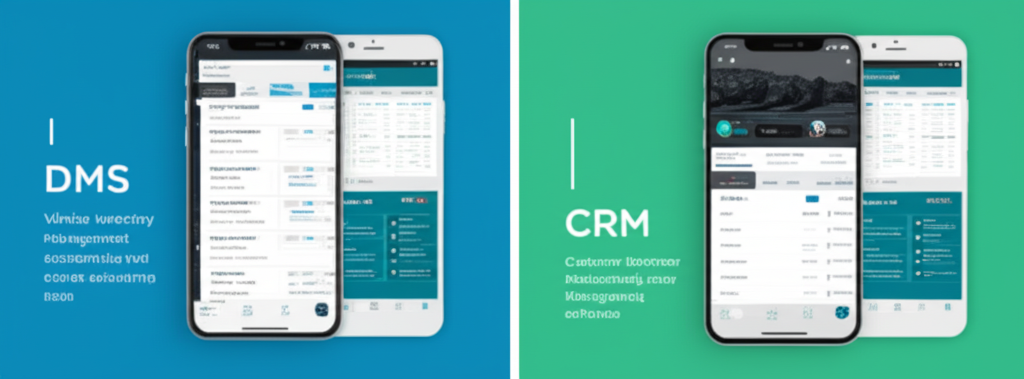
DMS vs CRM: What Each Does in a Dealership
Understand the difference between DMS and CRM for auto dealerships. Learn what each system does, when to use each, and how they work together.
DMS (Dealer Management System) manages ALL dealership operations: inventory, CRM, sales, F&I, service, accounting, and compliance. CRM (Customer Relationship Management) focuses specifically on leads and customer interactions: capturing inquiries, tracking communication, and managing the sales pipeline.
Think of CRM as one essential component within a comprehensive DMS. Most modern DMS platforms (like DealerOneView) include CRM functionality, so dealers don't need separate systems. This integration eliminates duplicate data entry and ensures customer interactions connect directly to inventory and deal data.
DMS vs CRM: Feature Comparison
| Feature | DMS | CRM (Standalone) |
|---|---|---|
| Inventory Management | ✓ Yes | No |
| Lead Management | ✓ Yes | ✓ Yes |
| Customer Database | ✓ Yes | ✓ Yes |
| Automated Follow-ups | ✓ Yes (good DMS) | ✓ Yes |
| Deal Desking | ✓ Yes | No |
| F&I Products | ✓ Yes | No |
| Service Department | ✓ Yes | No |
| Accounting | ✓ Yes | No |
| Compliance Documents | ✓ Yes | No |
What DMS Does
A comprehensive platform managing ALL dealership operations from acquisition to accounting.
1. Inventory Operations
- Vehicle Listings: Track VIN, pricing, photos, specifications across all channels
- Aging Analysis: Monitor days in stock with automated pricing recommendations
- Recon Workflow: Track vehicle prep status from acquisition to retail-ready
- Syndication: One-click publishing to AutoTrader, CarGurus, Facebook Marketplace
2. Customer & Sales Management
- CRM Integration: Lead capture, automated follow-ups, pipeline tracking (built-in)
- Deal Desking: Payment calculators, F&I product menus, deal structuring
- Document Generation: Auto-create compliant contracts and disclosures
- E-Signatures: Digital signing with full audit trail
3. Service & Finance
- Service Department: Repair orders, parts inventory, flat rate billing
- Accounting Integration: QuickBooks sync, A/P, A/R, commission tracking
- Compliance: Deal jackets, audit logs, 7-year document retention
- Reporting: Gross profit, inventory turnover, sales pipeline metrics
What CRM Does
Specialized system focused exclusively on customer relationship management and sales pipeline optimization.
1. Lead Capture & Management
- Multi-Source Capture: Website forms, phone calls, walk-ins, chat inquiries
- Lead Scoring: Prioritize leads based on engagement level and buying signals
- Lead Assignment: Automated distribution to sales reps based on territory or rotation
- Duplicate Detection: Prevent duplicate leads from multiple sources
2. Communication & Follow-up
- Email Campaigns: Drip sequences triggered by lead actions or time delays
- SMS Messaging: Text follow-ups with appointment reminders and promotions
- Call Tracking: Log phone conversations with call recording integration
- Activity Timeline: Complete history of customer interactions across all channels
3. Pipeline & Reporting
- Visual Pipeline: Drag-and-drop interface showing leads by stage (new, qualified, negotiation, closed)
- Conversion Metrics: Track response time, lead-to-appointment, appointment-to-sale rates
- Sales Forecasting: Predict monthly revenue based on pipeline velocity
- Rep Performance: Individual salesperson conversion rates and activity levels
When to Use Each System
Use DMS with Integrated CRM (Recommended)
Best for: Independent used car dealers (5-500 vehicles) who want a single platform for all operations.
- Eliminates duplicate data entry between inventory and customer systems
- CRM automatically knows vehicle availability for customer matching
- Lead-to-deal workflow in one system (no handoffs)
- Lower total cost ($499/month DMS+CRM vs $299 DMS + $199 CRM separately)
- Single login, single training, single vendor support
Use Standalone CRM + Basic DMS
Best for: Dealers with legacy DMS systems that lack modern CRM capabilities.
- Existing DMS handles inventory/accounting but has weak lead management
- Need advanced marketing automation (multi-touch campaigns, behavioral triggers)
- Can tolerate manual data sync between systems (risk of inconsistency)
- Have dedicated BDC (Business Development Center) team using CRM exclusively
Use CRM Only (No DMS)
Best for: Very small operations (1-5 vehicles) or lead generation businesses (not full dealerships).
- Primary focus is lead generation, not inventory management
- Using spreadsheets for simple inventory tracking
- No compliance documentation requirements (not licensed dealer)
- Minimal accounting needs (cash basis, no financing offered)
Frequently Asked Questions
What's the main difference between DMS and CRM?
DMS (Dealer Management System) manages ALL dealership operations: inventory, sales, service, accounting, compliance. CRM (Customer Relationship Management) focuses specifically on lead and customer management: capturing leads, tracking interactions, automating follow-ups, and managing the sales pipeline. Think of CRM as one component within a comprehensive DMS.
Can I use CRM without DMS?
Yes, but you'll need separate systems for inventory management, deal desking, accounting, and compliance documentation. Most independent dealers find it more efficient to use a DMS that includes CRM functionality rather than managing multiple disconnected systems.
Do I need both DMS and standalone CRM?
No. If your DMS includes robust CRM features (lead capture, automated follow-ups, pipeline management, customer database), a standalone CRM is redundant. However, some dealers use specialized automotive CRMs alongside basic DMS systems when the DMS CRM features are limited.
What CRM features should be in a good DMS?
Essential CRM features in DMS: lead capture (website forms, phone, walk-ins), automated email/SMS follow-up sequences, lead scoring and prioritization, customer database with purchase history, sales pipeline tracking, appointment scheduling, and integration with inventory for vehicle matching.
Get DMS + CRM in one platform. DealerOneView includes robust CRM features integrated with inventory, sales, and compliance. No need for separate systems or duplicate data entry.
Related Articles
What is a DMS? Dealer Management System Explained
Cloud DMS vs On-Premise: Pros/Cons for Dealerships
DMS Implementation Checklist: Timeline, Data Migration, Training
DMS KPI Dashboard: Sales, Inventory Aging, Gross, Recon
Get More Insights Like This
Subscribe to our newsletter for the latest dealership tips and industry trends.