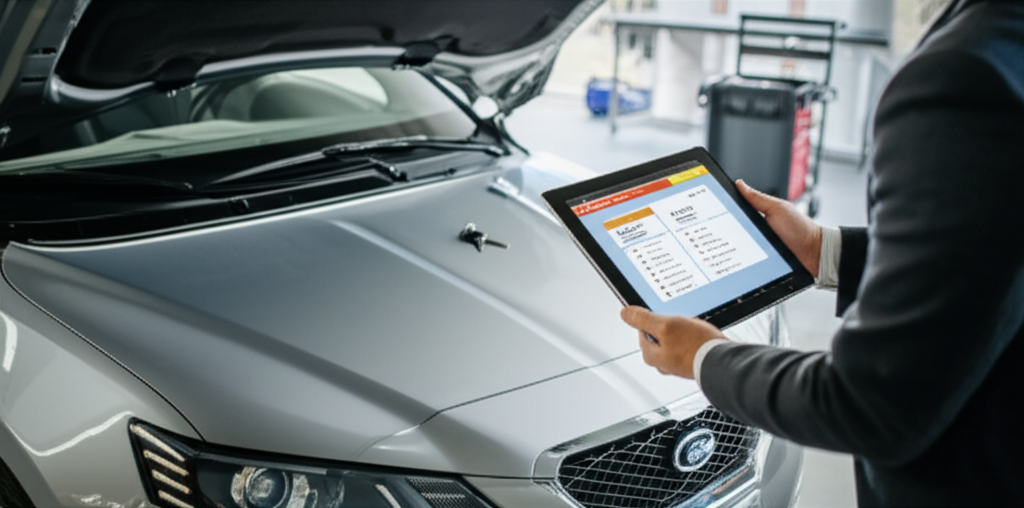
Trade-In Lead Workflow: Appraisal, Negotiation, Close
Trade-in lead process: instant appraisal tools, negotiation scripts, ACV verification. Convert online appraisals to showroom visits.
Trade-in leads are gold. Customers who submit trade-in appraisal requests convert at 35-45% (2-3x higher than generic inquiries) because they're actively shopping, already own a vehicle, and have built-in down payment equity. They're not researching - they're buying.
Yet many dealers treat trade-in leads like any other inquiry: slow response, vague appraisal values, and weak urgency-building. The result? Hot buyers go to competitors who respond faster and offer transparent valuations.
A trade-in lead workflow is a specialized process designed to maximize conversion of high-intent trade-in inquiries through immediate contact, upfront value disclosure, rapid in-person appraisal scheduling, and seamless transition to vehicle purchase. Dealers with optimized trade-in workflows see 30-50% higher close rates on these leads.
This guide provides a step-by-step trade-in lead workflow, appraisal best practices, negotiation scripts, and CRM automation rules.
Why Trade-In Leads Deserve Special Treatment
Higher Conversion Rates
| Lead Type | Average Conversion Rate | Why |
|---|---|---|
| Trade-in appraisal request | 35-45% | Active shopper, equity available, urgent timeline |
| Website inquiry (specific vehicle) | 15-25% | Interest in inventory, but comparison shopping |
| Third-party lead (AutoTrader, CarGurus) | 5-10% | Price-focused, sent same inquiry to 5+ dealers |
| Generic brochure download | 2-5% | Early research stage, no immediate intent |
Buyer Intent Signals in Trade-In Leads
- Current vehicle ownership: Already own a car (proof of ability to buy)
- Built-in down payment: Trade equity reduces financing needs
- Active timeline: Submitting appraisal = shopping now, not researching
- Emotional commitment: Psychological barrier of "giving up" current car reduces backing out
- Urgency drivers: Car problems, life changes (new job, growing family) create immediate need
The 7-Step Trade-In Lead Workflow
Step 1: Immediate Contact (< 5 Minutes)
Goal: Be the first dealership to respond. Trade-in leads often submit appraisals to 3-5 dealers simultaneously - first to respond wins 50% of the time.
Action:
- Phone call within 5 minutes: No exceptions. Set CRM alert to notify on-duty sales rep instantly.
- SMS backup if no answer: "Hi [Name], I just called about your [Year Make Model] trade-in appraisal. I have your value ready - when can I reach you? - [Rep Name], [Dealership], [Phone]"
- Email follow-up (+10 minutes): Send preliminary appraisal range + link to schedule in-person inspection
Phone Script (Opening):
"Hi [Name], this is [Rep] from [Dealership]. I saw you requested an appraisal for your [Year Make Model]. Great news - I pulled the value and have it ready for you. Do you have 2 minutes to go over it?"
Step 2: Preliminary Valuation (Over Phone)
Goal: Build trust with transparent, data-backed value range. Avoid "you need to come in first" (customers hate this).
Valuation Process:
- Pull vehicle details: Use VIN to get exact year, make, model, trim, features
- Check market comps: Search AutoTrader, CarGurus, Facebook Marketplace for similar vehicles (same year/make/model, +/- 10K miles)
- Calculate preliminary range: Take average retail price of comps × 60-70% = wholesale value range
- Disclose range, not exact value: "Based on similar vehicles, I'm seeing a trade-in value of $8,000-$10,000, depending on condition and options. The exact value will be finalized when I inspect it in person."
Valuation Formula (Preliminary):
Trade-In Value Range = (Average Retail Comps × 0.60) to (Average Retail Comps × 0.70)
Example: 2020 Honda Civic LX retails for $18,000 on AutoTrader. Preliminary trade-in range: $10,800 - $12,600.
Phone Script (Value Disclosure):
"I pulled up similar 2020 Honda Civics selling in our area. I'm seeing them retail for around $18,000-$19,000. Based on that, your trade-in value is in the $10,500-$12,500 range, depending on mileage, condition, and options. Does that sound reasonable to you?"
NEVER say: "I can't give you a value until you come in." (Customers will hang up and call a competitor who will.)
Step 3: Schedule In-Person Appraisal
Goal: Convert phone call into dealership visit within 24-48 hours.
Scheduling Script:
"To finalize the exact value, I need to do a quick 15-minute inspection - check tires, brakes, interior condition, etc. When can you bring it by? I have openings today at 3 PM or tomorrow at 11 AM. Which works better for you?"
Urgency Builder: "The market is strong right now for [Vehicle Type], so if you're thinking about trading in the next week or two, this is a great time."
Offer convenience:
- "I can do the appraisal in 15 minutes - you don't even need an appointment, just stop by when you're free."
- "If you're interested in a specific vehicle on our lot, I'll have it ready for a test drive when you bring your trade-in."
Step 4: In-Person Appraisal (15-20 Minutes)
Goal: Finalize exact trade-in value, build rapport, and transition to vehicle purchase conversation.
Inspection Checklist (5 minutes):
- Exterior: Paint condition, dents, scratches, rust, tire tread depth (use tread gauge - 4/32" minimum for safety)
- Interior: Seat condition, dashboard cracks, odors (smoke, pets), carpet stains, electronics (radio, A/C, windows)
- Mechanical: Start engine (listen for knocks, rough idle), check for warning lights, test drive (brakes, transmission shifts)
- Underbody (if lift available): Leaks, frame damage, suspension wear
- Service history: Ask for maintenance records (oil changes, major repairs)
Valuation Refinement (5 minutes):
- Pull comps again: Refine search with exact mileage, trim, options discovered during inspection
- Adjust for condition: Excellent (+10%), Good (0%), Fair (-10%), Poor (-20%)
- Adjust for repairs needed: Deduct repair costs (new tires: -$600, brakes: -$400, transmission issues: -$1,500+)
- Calculate final offer: Comp average × 65% +/- condition adjustments
Final Offer Formula:
Final Trade-In Offer = (Retail Comp Average × 0.65) - Repair Costs
Example: 2020 Civic retails for $18,000. Good condition (no adjustments). Needs tires ($600). Offer: ($18,000 × 0.65) - $600 = $11,100
Step 5: Present Appraisal Offer (5 Minutes)
Goal: Deliver value transparently with data to support offer. Avoid "take it or leave it" approach.
Presentation Script:
"Okay, I've inspected your [Vehicle] and pulled current market data. Here's what I found:
[Show comps on screen or printout] Similar vehicles are retailing for $17,500-$19,000. I'm seeing an average of $18,000.
Your vehicle is in good condition overall. The tires have about 30% tread left, so you'll need new tires soon (about $600). Everything else looks solid.
Based on this, I can offer you $11,100 for your trade-in. This is a fair wholesale value based on what we'd need to invest to get it retail-ready (tires, detail, inspection).
How does that sound?"
Visual Aid: Show customer the comps on a laptop/tablet. Transparency builds trust.
Step 6: Handle Objections
Common objection: "That's lower than I expected / saw online."
Response Script:
"I understand - online tools like KBB and Edmunds show retail values, which is what you'd sell it for yourself (private party). As a dealer, we're offering wholesale value because we'll need to:
- Invest in reconditioning (tires, detail, inspection): $800-$1,200
- Market the vehicle (photos, listings, advertising): $300-$500
- Carry floor plan interest while it sits: $50-$100/month
- Account for depreciation risk (market can drop while we own it)
The difference between my offer ($11,100) and retail value ($18,000) is about $6,900. That covers our costs and a small profit. If you sold it yourself, you'd get more - but it takes 4-6 weeks on average, and you'd deal with tire-kickers, no-shows, and financing hassles. My offer is instant cash, and we handle all the paperwork."
Common objection: "Dealer X offered me more."
Response Script:
"That's great! If they're offering more, you should take it - I want you to get the best deal. Can I ask - did they inspect the vehicle in person, or was it a phone quote? Sometimes dealers quote high to get you in the door, then 'discover' issues during inspection and lower the offer. My $11,100 is firm - it won't change when you come back. But if you get a better offer in writing, I'm happy to match it if I can."
Never: Trash competitors or argue. Let the customer decide - confidence in your offer is more persuasive than desperation.
Step 7: Transition to Vehicle Purchase
Goal: Use trade-in as gateway to selling them a vehicle.
Transition Script:
"So you're trading in your [Vehicle] - what are you looking to get into? Are you staying with [Make/Type], or exploring something different?"
[Listen to response]
"Perfect - I actually have 3-4 vehicles that would be a great fit. Let me show you what we have in stock. Your trade-in value is $11,100 - let's see what your monthly payment would look like on a $20,000 vehicle..."
Payment Calculator Anchor: Show how trade equity reduces payment:
- Without trade: $20,000 financed at 6% for 60 months = $386/month
- With $11,100 trade: $8,900 financed at 6% for 60 months = $172/month
- Pitch: "Your trade-in cuts your payment in half. Let's find the perfect vehicle for $172/month."
CRM Automation for Trade-In Leads
Automation Rule 1: Instant Alert
- Trigger: New trade-in appraisal form submitted
- Action: Send SMS alert to on-duty sales rep: "🔥 TRADE-IN LEAD: [Customer Name] - [Year Make Model] - CALL NOW: [Phone]"
- Escalation: If no contact within 5 minutes, alert sales manager
Automation Rule 2: Pre-Fill Appraisal Data
- Trigger: Customer enters VIN on trade-in form
- Action: Auto-populate year, make, model, trim from VIN decoder API
- Benefit: Saves rep time - can start pulling comps before phone call
Automation Rule 3: Automated Comp Research
- Trigger: VIN + mileage submitted
- Action: CRM pulls market comps from AutoTrader/CarGurus API, calculates preliminary range
- Display: Show rep "Suggested offer: $10,500-$12,000 (based on 8 comps)" before phone call
Automation Rule 4: Follow-Up Sequence (If No Show)
- Trigger: Customer scheduled in-person appraisal but didn't show
- Action: Send SMS: "Hi [Name], I had you scheduled today for your [Vehicle] appraisal. Still interested? I can do it anytime tomorrow. - [Rep]"
- Follow-up (+24 hours): Email with preliminary offer + online appraisal link: "Submit photos for instant offer"
Trade-In Lead Performance Metrics
Track these KPIs to optimize your trade-in workflow:
| Metric | Goal | How to Improve |
|---|---|---|
| Response Time (Trade-In Leads) | < 5 minutes | Enable CRM push notifications. Assign dedicated rep for trade-in leads. |
| Trade-In Lead Conversion Rate | 35-45% | Improve phone scripts. Provide transparent valuations upfront. |
| Appraisal Show Rate | 60-80% | Confirm appointment via SMS day-of. Offer flexible scheduling (evenings, weekends). |
| Trade-In to Purchase Rate | 50-70% | Transition smoothly from appraisal to vehicle shopping. Show payment reduction. |
| Appraisal Duration | 15-20 minutes | Streamline inspection checklist. Use pre-populated comp data from CRM. |
Common Trade-In Workflow Mistakes
1. Slow Response to Trade-In Leads
Mistake: "I'll call them back in an hour after I finish with this customer."
Reality: Trade-in leads are shopping NOW. Every minute you delay, a competitor is calling.
Fix: Drop everything for trade-in leads. Assign dedicated rep or rotation for immediate contact.
2. Refusing to Give Preliminary Values Over Phone
Mistake: "I can't give you a value until you come in for an inspection."
Reality: Customers hate this. They'll call 5 dealers until one gives them a number.
Fix: Provide a transparent range based on VIN + mileage + condition questions. Clarify: "Final value subject to in-person inspection."
3. Lowball Offers to "Leave Room for Negotiation"
Mistake: "I'll offer $8,000 so I can go up to $10,000 if they push back."
Reality: Customers research values online. Lowball offers destroy trust and credibility.
Fix: Offer fair market value upfront (retail comp × 65%). Build trust, not negotiation room.
4. Failing to Transition to Vehicle Purchase
Mistake: "Here's your appraisal - $11,100. Let us know if you want to trade it in."
Reality: Customer came for appraisal because they want to BUY. You must transition them to shopping.
Fix: "What are you looking to get into? Let me show you what's in stock. Your trade cuts your payment in half."
Frequently Asked Questions
Why are trade-in leads more valuable than regular inquiries?
Trade-in leads convert 2-3x higher than generic inquiries (35-45% vs 15-20%) because they already own a vehicle, are actively shopping, and have built-in down payment equity. They represent immediate buying intent.
How do I handle trade-in leads differently than other leads?
Trade-in leads require immediate contact (< 5 minutes), upfront appraisal value disclosure, and rapid transition to in-person inspection. Prioritize these leads over all others except scheduled appointments.
Should I give appraisal values over the phone or require an in-person visit?
Provide a preliminary range over the phone based on VIN/mileage/condition ('$8,000-$10,000 depending on inspection') to build trust, then schedule in-person appraisal to finalize exact value. Never lowball - it destroys credibility.
What if the customer's trade-in value is too low for their expectations?
Lead with market data: 'Based on similar vehicles selling on AutoTrader/CarGurus, we're seeing $X range. Here's what I found...' Show comps on screen. Avoid statements like 'Your car isn't worth that' - let data do the talking.
How long should the trade-in appraisal process take?
Aim for 15-20 minutes total: 5 minutes to walk around vehicle and test drive, 5 minutes to pull comps and calculate value, 5 minutes to present offer and negotiate. Longer = customer anxiety increases.
Can trade-in appraisals be automated?
Yes. Online appraisal tools (VIN lookup + mileage + condition questions) generate instant preliminary offers, increasing lead volume. However, in-person inspection is always required for final value - photos and customer-reported condition are often inaccurate.
Never miss another high-value trade-in lead.
DealerOneView CRM includes instant trade-in lead alerts, automated comp research with market data, appraisal templates, and seamless transition workflows from appraisal to vehicle purchase. Stop losing hot buyers to slow competitors.
See Trade-In Workflow in Action →
Related Articles
Get More Insights Like This
Subscribe to our newsletter for the latest dealership tips and industry trends.